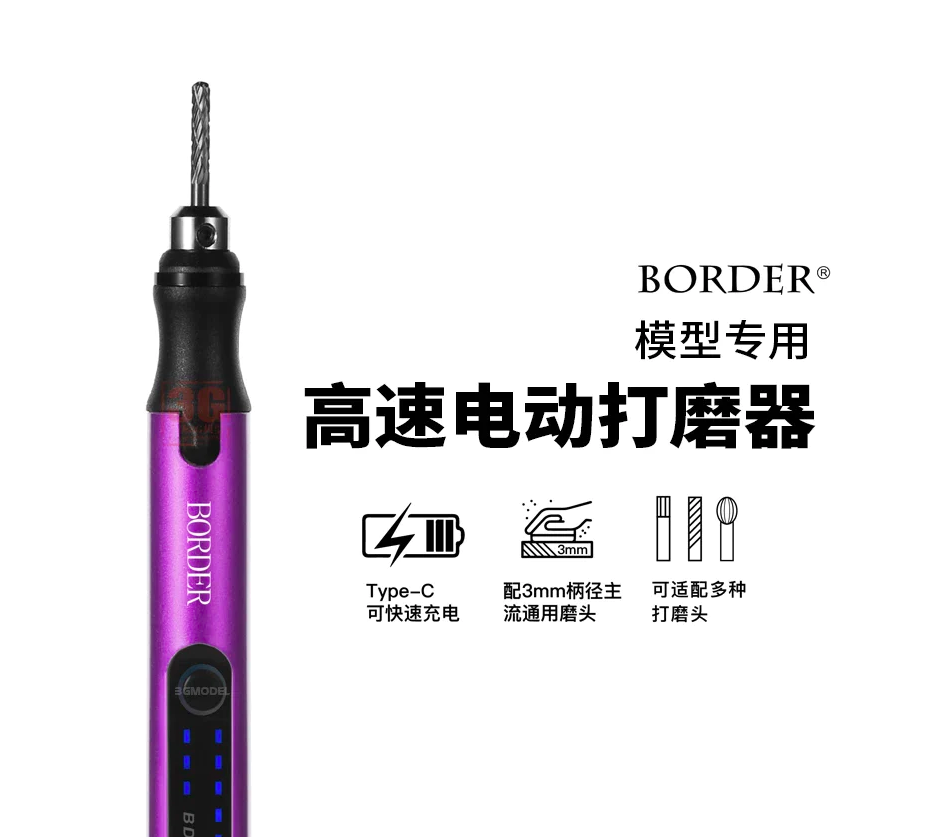
![Border Model Electric Milling Cutter Tool w/ USB-Type-C Charge Line [BD0077]](/assets/full/BDM-BD0077.png?20230518111834)
The gradual turning of the tide in the Pacific in favour of the Allies led Japanese military leaders to think about the threat of a US-backed invasion. To withstand these attacks, the Japanese needed heavy tanks, but their projects were merely in the design stage. Their German allies, however, boasted the powerful Pz.Kpfw. VI Tiger. Germany responded to the plea of its Axis allies. Hiroshi Oshima, the Japanese ambassador, was taken to the Kummersdorf facility and shown the production of Tigers at the Henschel plants. The ambassador got closely acquainted with the product, he became thrilled with the idea and entered into negotiations with the German Ministry of Armaments. In 1943, the Japanese received two packages of technical documentation. A point of purchasing the tanks has been raised as the cost of a Tiger was around 300,000 Reichsmarks in comparable prices of 1943 but the Ministry of Armaments and Henschel requested 645,000 Reichsmarks. First, the tank would be supplied with ammunition, radio and optics. Second, the Germans were ready to disassemble and pack the tank before shipping it to Japan. It seems that the cost of technical documentation was also included in the price. To get these tanks to Japan the option with surface ships was disregarded, as the Allies commanded the Mediterranean Sea and the Atlantic. Underwater shipping became the only alternative - however, there were not many vessels that could bear a huge 30-ton hull. Submarine aircraft carriers that had corresponding characteristics were not finished, and the Tiger had many chances to hit a snag on its way to Japan. Based on the most optimistic of estimates, the buyer could count on delivery by December 1944. Nevertheless, the tank was sent to the Bordeaux port. In February 1944, the Japanese paid for the order and officially came into possession of the Tiger, but it could not yet be delivered. In the summer of 1944, the Allies landed in Normandy and following the Decision of the Supreme High Command of the German Army dated 21 September 1944, the Japanese Tiger was leased back to Germany (or requisitioned, according to other sources). The tank went to what was being formed as the 101st SS heavy tank battalion in Belgium... I t was lost somewhere on the Western Front.
(BDM-BD0077)
| SKU | BDM-BD0077 |
| Barcode # | BDM-BD0077 |
| Brand | Border Model |
More From This Category
sale
In Stock
![Vallejo Tools Pick & Place Tool - Medium [T12002]](/assets/thumb/AVT12002.jpg?20221212121501)
sale
In Stock
In Stock
![Artesania Nailer Modelling Tool [27023]](/assets/thumb/ART-27023.png?20221212121654)
![Artesania Blades for Cutter #1 (5) Modelling Tool [27049]](/assets/thumb/ART-27049.png?20221212181125)