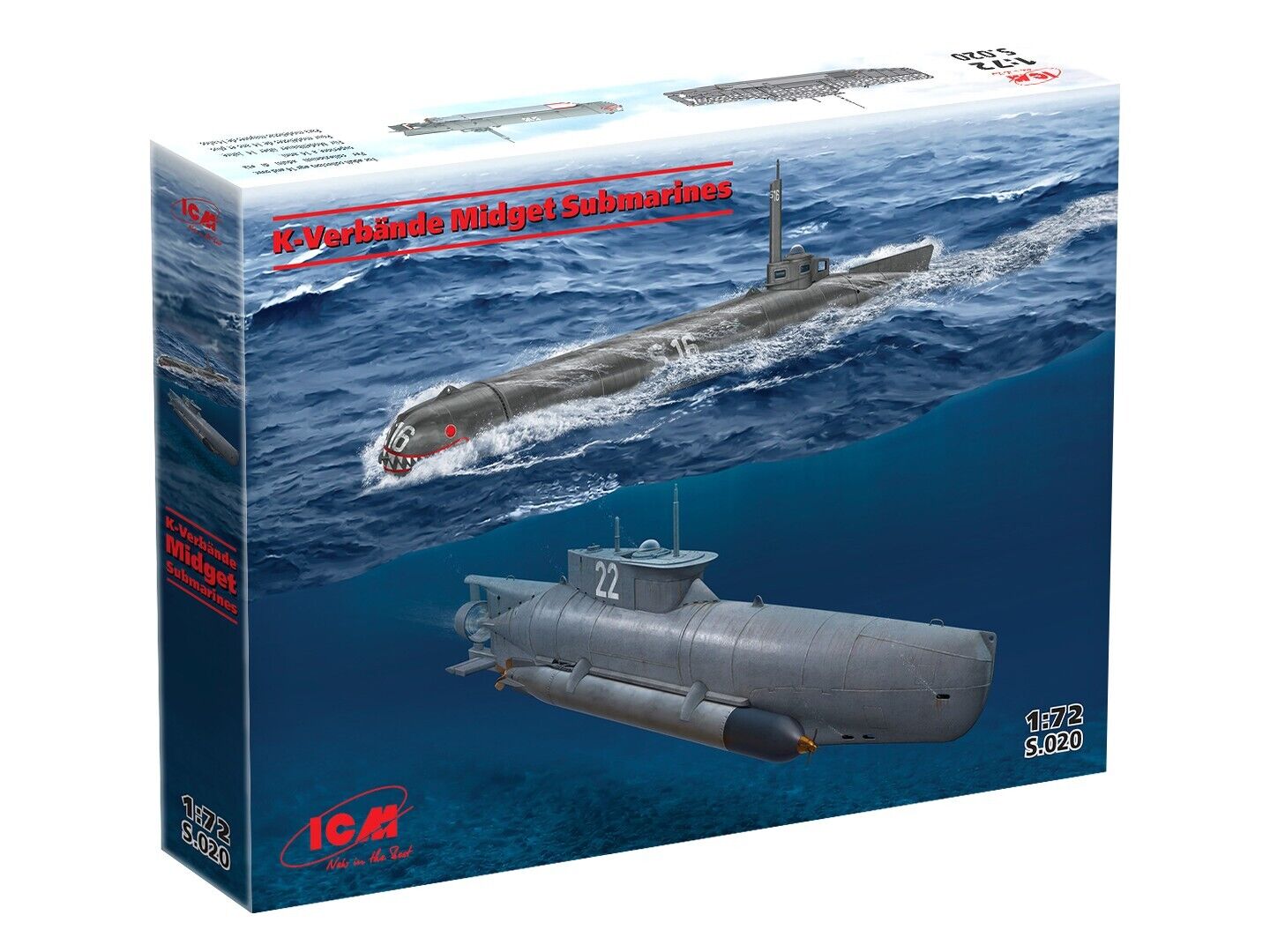
K-Verbände Midget Submarines
During the Second World War, the German Navy created a special K-Verbände (K-Verbände, full name Kleinkampfverbände der Kriegsmarine). Its tasks were to conduct sabotage and assault operations on rivers, at sea and in the coastal zone. The unit consisted of units of subversive boats, manned torpedoes, combat swimmers and various types of mini-submarines. One of these submarines was the single-seat ‘Molch’, designed for operations in the coastal zone. They were equipped with a single electric motor for surface and underwater propulsion, a submersible depth of up to 60 metres, and a maximum speed of 5 knots in the underwater position.
The Molch was built at the Deschhimag shipyard in Bremen, with a total of 393 Kriegsmarine units. These submarines were deployed in the Mediterranean and North Seas as part of Compound K. Another type was the ‘Seehund’, which was larger, had improved seaworthiness and a two-man crew. They also had two separate engines for surface and submarine operations. By the end of the war, 285 units had been built, and they were considered the best type of German ultra-small submarine. After the war, several Seehunds served in the French Navy.
The K-Verbande Midget Submarines were a series of small, clandestine naval vessels employed by Nazi Germany during World War II.
Developed by the K-Verband, a special naval unit focused on unconventional and surprise naval warfare tactics, these midget submarines played a role in several operations, including attacks on Allied shipping.
The most well-known K-Verbande midget submarine was the "Biber" (beaver), a one-man submersible craft with limited range and armament.
The Biber submarines were designed for short-range coastal defense and sneak attacks.
They were equipped with a small torpedo and had a relatively simple construction, making them easy to produce in large numbers.
The K-Verbande Midget Submarines were part of Germany's efforts to counter the overwhelming naval superiority of the Allied forces.
Their design allowed them to operate in shallow coastal waters, providing a tactical advantage in surprise attacks.
The submarines were often transported to their operational areas on the decks of larger submarines or by road, allowing for a degree of mobility and flexibility in deployment.
While the K-Verbande midget submarines had limitations, including their short range and vulnerability, they were utilized in various theaters, including the English Channel and the Mediterranean.
However, the overall impact of these midget submarines on the outcome of the war was limited, as they faced challenges in navigating heavily defended waters and encountering effective anti-submarine measures.
The K-Verbande's use of midget submarines reflected the innovative and unconventional tactics employed by both the Axis and Allied powers during World War II.
Despite their limited success, these submarines played a role in the broader context of naval warfare during the conflict.
Key Specifications
- Scale: 1:72
Full Specifications
| Plastic Kits | Sea |
| SKU | ICMS020 |
| Manufacturer | ICM |
| Short Description | ICM 1/72 K-Verbande Midget Submarines ('Seehund' and 'Molch') # S020 |
(ICMS020)
| SKU | ICMS020 |
| Barcode # | 4823044410262 |
| Brand | ICM |
More From This Category
In Stock
sale
In Stock
sale
In Stock